
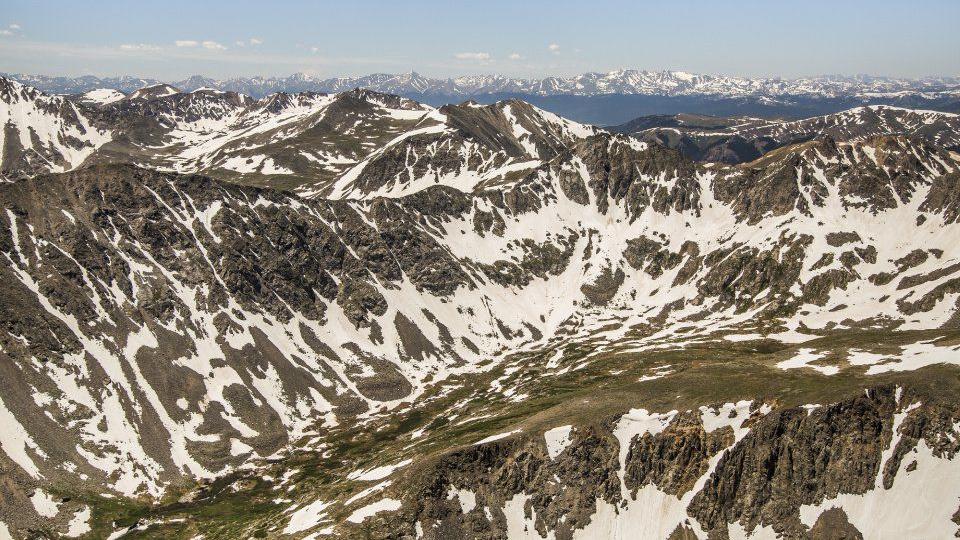
First-year reservations and shuttles at one of Colorado’s most popular mountains have ended for the season.
Now comes the question: Will they return next summer and fall?
At a recent community gathering, Summit County Sheriff Jaime FitzSimons said the changes at Quandary Peak would be discussed and contemplated over the winter.
He was among concerned representatives who met last year to plan ways to relieve stresses brought on by visitors to the 14,000-foot peak, which is estimated to attract close to 50,000 people every climbing season. Sheriff’s deputies regularly find lines of cars parked up and down busy Colorado 9, while search and rescue teams have struggled to stage at the overrun trailhead parking lot.
Decisions were made after a study and public survey. From the end of July to the end of October, hikers bought reservations online to park at the trailhead — $20 for half day or $50 for full — or took a free shuttle from Breckenridge.
Summit County Rescue spokesperson Anna DeBattiste said crews were more efficient this past season.
“Every time we were up there, we just pulled right in. There was plenty of room for us to park,” she said. “We thought everything went really smoothly.”
But others have criticized the system. Comments on the rescue group’s Facebook page suggest the privatizing of a public fourteener and accuse the sheriff’s office of overreach. Attempts to reach FitzSimons for this article were unsuccessful.
Fees for trailhead parking reservations seem “a bit steep” to Lloyd Athearn, executive director of Colorado Fourteeners Initiative, which advocates for access and preservation. “I was a little surprised by that amount,” he said.
According to Summit Daily News, FitzSimons said about 3,200 people paid for reservations during the system trial. DeBattiste said she asked the sheriff’s office if that paid for deputies patrolling illegal parking on surrounding roads.
“And they said no, it really doesn’t,” DeBattiste said. “This is not a revenue generator in any sense.”
It might hamper access, Athearn said. He said his organization’s in-ground counters along the Quandary trail showed a possible 27% year-to-year drop in traffic from June through August. The data is “rough,” he said, while adding some drop was to be expected after record numbers during the 2020 pandemic.
But if reservations and shuttles were to continue, Athearn said trends should be monitored.
“We also want to look at, are there changes, for example, in the use of Lincoln, Democrat and Bross?” he said, mentioning other fourteeners frequented by Front Range hikers, along with Mount Bierstadt. “Do we see more people go there than we normally would, because people are displaced?”
In a previous interview, White River National Forest Supervisor Scott Fitzwilliams said Quandary represents the effect of Colorado’s bigger outdoor crowds meeting federal land managers’ smaller budgets.
“If things keep growing the way they are, it’s inevitable that some of these areas are going to have to have some management scenarios, either permits or reservations or some sort of those types of tools,” Fitzwilliams said.
Quandary represents “this double-edged sword,” Athearn said.
“On one hand, these mountains provide so much joy and inspiration and they should be experienced,” he said. “On the other hand, when we have 40,000 to 50,000 people heading to Quandary, is that too much to manage?”
Equity should be at the forefront, he said.
“It’s a worrying trend if we say, ‘There are too many people going to these mountains, we’ve got to limit the people.’ And then the limitation tends to go the way of people’s ability to pay.”
This content was originally published here.